
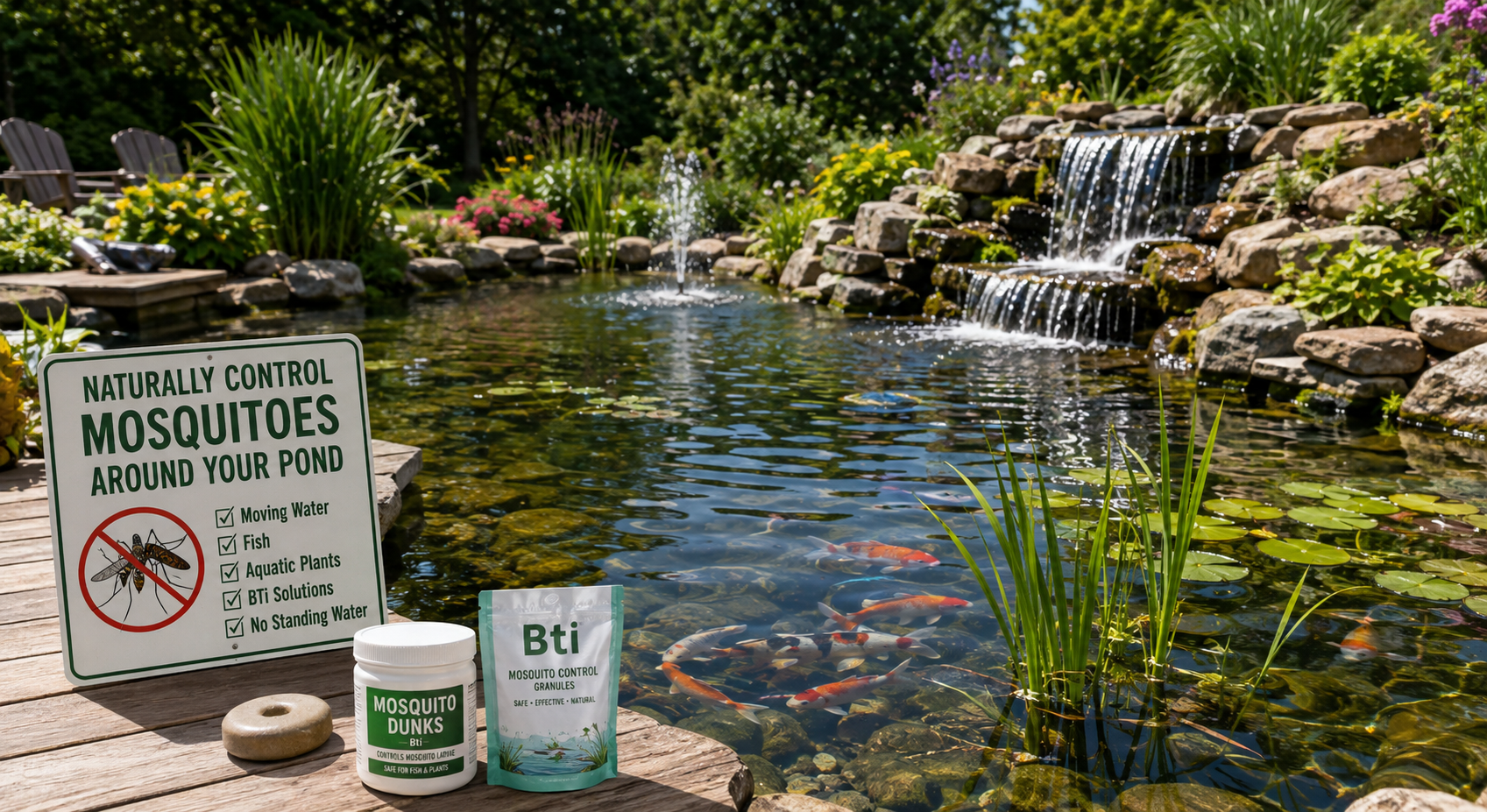
How Can You Control Mosquitoes Around a Backyard Pond Naturally?
August 6, 2026, 0 CommentsHow Can You Control Mosquitoes Around a Backyard Pond Naturally?
A backyard pond is one of the most rewarding landscape features you can have, but the last thing you want is for it to become a mosquito breeding ground. A well-designed and properly maintained pond actually resists mosquito breeding, and there are proven natural methods to keep mosquito populations in check without chemicals that harm fish, frogs, or the broader ecosystem.
Why Ponds Attract Mosquitoes
Mosquitoes lay eggs in standing, still water. The key word is still. Moving water is inhospitable to mosquito larvae, which need calm conditions to feed and breathe at the water’s surface. Problems arise when water stops moving, when shallow stagnant areas form at the pond’s edge, or when separate containers around the pond collect water.
Keep Water Moving at All Times
Continuous water movement is your most effective defense. Waterfalls, fountains, and bubblers create surface turbulence that prevents mosquitoes from successfully depositing and hatching eggs. Even a modest waterfall running 24 hours a day substantially reduces mosquito breeding potential.
If your pond has a calm zone with little circulation, add a small fountain head or directional pump to that area. Eliminating any still corner removes a potential breeding site.
Introduce Mosquito-Eating Fish
Fish are one of the most effective biological controls available. Koi and goldfish consume mosquito larvae enthusiastically. In a well-stocked pond, larvae rarely survive long enough to become adults.
Gambusia (Mosquitofish)
Gambusia affinis, commonly called mosquitofish, are small freshwater fish bred specifically for mosquito control. They consume large quantities of larvae relative to their body size. They are available through mosquito abatement programs and are often free or low-cost. Note that they can be aggressive toward smaller ornamental fish, so introduce them thoughtfully.
Koi and Goldfish
If you already keep koi or goldfish, they are actively consuming any larvae that appear. Maintaining a healthy fish population is one of the simplest ways to ensure mosquitoes never establish a foothold.
Use Bacillus thuringiensis israelensis (Bti)
Bti is a naturally occurring soil bacterium that is toxic to mosquito larvae but completely safe for fish, birds, beneficial insects, pets, and humans. Available in dunks or granular form, it releases proteins that destroy the digestive systems of larvae when ingested.
Mosquito dunks placed in areas with reduced circulation provide weeks of control and are among the most ecologically responsible methods for mosquito management in water features.
Add Aquatic Plants Strategically
Dense aquatic vegetation provides habitat for natural mosquito predators and covers the surface in ways that restrict breeding opportunities. At the same time, avoid overly dense, tangled growth at the water’s edge where still pockets can form. Prune and thin aquatic plants regularly during summer to maintain good circulation throughout the pond.
Eliminate Surrounding Standing Water
Mosquitoes don’t need a pond to breed. They’ll use any container holding a few inches of water: plant saucers, bird baths, clogged gutters, or unused containers. Eliminating these sources removes breeding habitat more efficiently than any treatment.
Walk your property after rain and address anywhere water pools and sits for more than a few days. This single habit reduces mosquito pressure significantly across your entire outdoor space.
Professional Pond Design Helps
Poorly designed ponds with shallow, stagnant edges or inadequate filtration create chronic mosquito problems that are difficult to solve after the fact. A properly designed pond, with appropriate depth, circulation, and plant coverage, naturally resists mosquito breeding from the start. Reflections Water Gardens designs ponds with these dynamics in mind.
Frequently Asked Questions
Will my koi eat mosquito larvae?
Yes. Koi and goldfish actively feed on mosquito larvae at the water’s surface. A well-stocked pond with active fish is one of the most reliable natural controls for mosquito larvae.
Are mosquito dunks safe for koi and frogs?
Yes. Dunks containing Bti are specifically toxic to mosquito and fungus gnat larvae and have no harmful effect on fish, frogs, birds, or other wildlife when used as directed.
How do I stop mosquitoes from breeding in the shallow edges of my pond?
Increase water movement in shallow areas using a directional pump or small fountain. You can also add mosquitofish to shallow zones or apply Bti dunks where circulation is limited.
Does pond size affect mosquito risk?
Larger ponds with active circulation and healthy fish populations are generally at lower risk. Smaller, shallower ponds with limited movement and no fish are the highest-risk environments for mosquito breeding.
0 Comments