
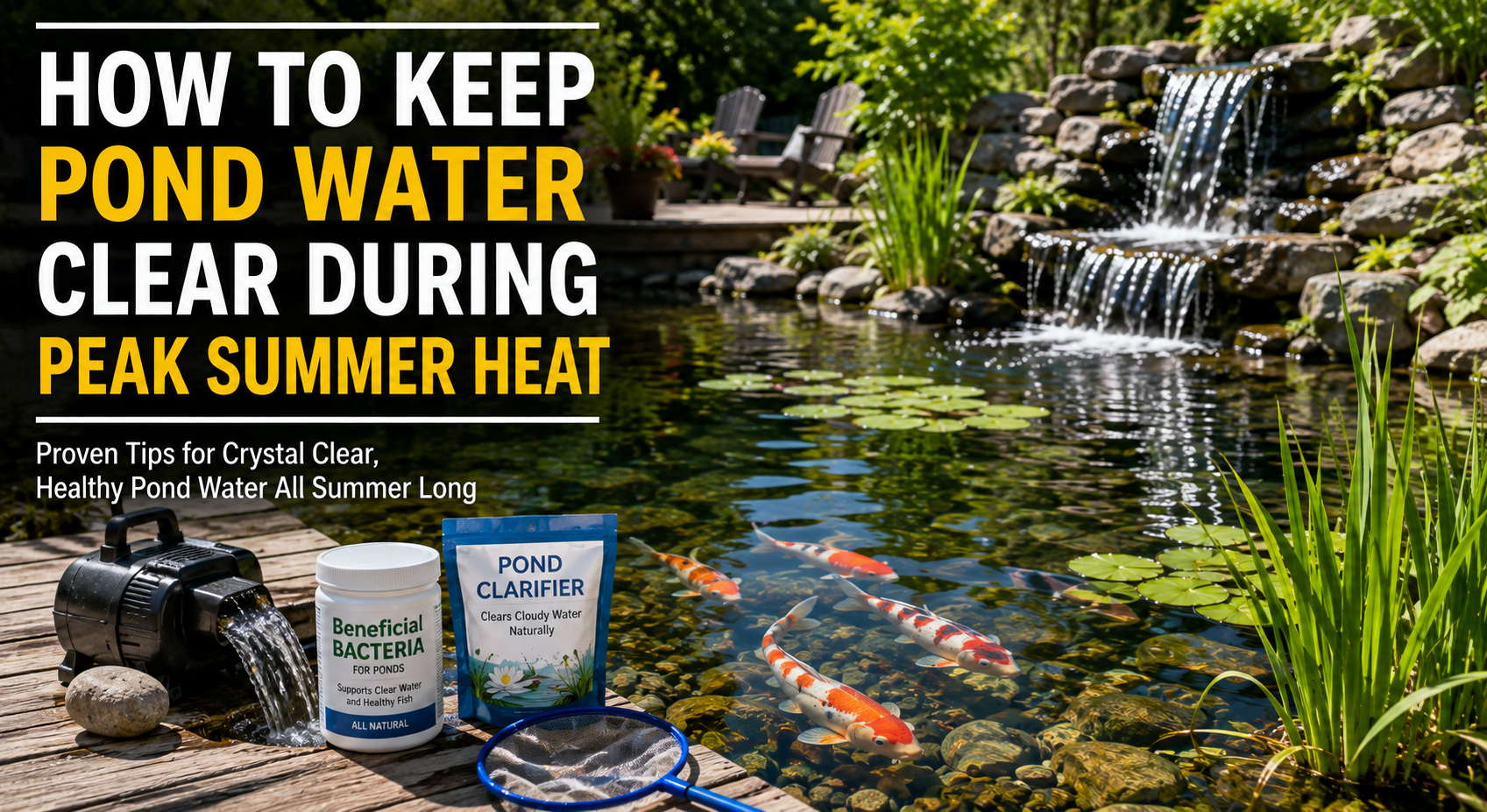
How Do You Keep Pond Water Clear During Peak Summer Heat?
August 1, 2026, 0 CommentsHow Do You Keep Pond Water Clear During Peak Summer Heat?
Summer heat puts your pond under real stress. Warmer water holds less oxygen, algae blooms explode, and water clarity can collapse seemingly overnight. The good news is that keeping your pond clear through the hottest months is achievable when you understand what drives the problem and address it consistently.
Why Summer Heat Clouds Pond Water
When water temperatures climb above 75°F, several things happen at once. Algae, which thrives in warm, nutrient-rich water, multiplies rapidly. Beneficial bacteria that break down fish waste become overwhelmed. And dissolved oxygen levels drop, which stresses fish and slows the biological filtration your pond depends on.
Aeration Is Your Most Important Tool
Oxygen is the foundation of a clear, healthy pond. A quality aeration system, whether a waterfall, fountain, or dedicated aerator, keeps water moving and gases exchanging at the surface. This directly supports the beneficial bacteria in your filter and keeps fish healthy enough to resist disease.
If your waterfall alone isn’t cutting it during peak heat, add a supplemental aerator or air stone. More surface agitation means more oxygen and a more stable system.
Control Nutrients to Starve Algae
Algae feeds on excess nutrients, primarily nitrogen and phosphorus, that accumulate from fish waste, uneaten food, and decomposing plant material. Controlling those inputs is the most sustainable way to keep water clear.
Feed Fish the Right Amount
Only feed your fish what they can consume in three to five minutes. Uneaten food sinks, decomposes, and fuels algae growth. During extreme heat, fish metabolisms slow, so you may need to feed even less than usual.
Remove Debris Regularly
Fallen leaves and dead plant material break down and release nutrients into the water. Skim your pond surface regularly and clean the bottom when debris accumulates. A pond net stretched over the water during high-debris periods saves a lot of cleanup work.
Shade Reduces Algae Pressure Significantly
Direct sunlight fuels algae growth. Covering 40 to 60 percent of your pond’s surface with floating aquatic plants such as water lilies or water hyacinth blocks sunlight from penetrating and starves algae of one of its key requirements. Aquatic plants also compete directly with algae for the same nutrients.
If your pond lacks plant coverage, shade cloth or a pergola structure can accomplish the same goal during peak summer months.
Biological Filtration Does the Heavy Lifting
A properly sized and maintained biological filter is the backbone of long-term water clarity. The beneficial bacteria living in your filter media convert harmful ammonia and nitrite into less harmful nitrate, which plants then consume. When your filter is undersized or poorly maintained, this process breaks down and water quality suffers.
Always rinse filter media in pond water, never tap water. Tap water’s chlorine will kill the beneficial bacteria colonies you depend on.
Beneficial Bacteria Supplements Help
Adding a quality beneficial bacteria supplement during summer reinforces your filter when demand is highest. Dose consistently and follow product guidelines based on your pond’s volume.
When to Call a Professional
Persistent water clarity problems despite consistent maintenance often indicate an underlying issue such as an undersized filter, an overstocked pond, or a liner leak. A professional pond assessment can identify what routine maintenance alone cannot solve.
At Reflections Water Gardens, our pond maintenance services are designed to keep your water feature performing beautifully through every season, including the demanding summer months.
Frequently Asked Questions
Why does my pond turn green in summer but stay clear in spring?
Warmer water temperatures accelerate algae growth while reducing dissolved oxygen, creating ideal conditions for blooms. Spring’s cooler temperatures naturally slow algae development.
How often should I run my pond pump during summer?
Run your pump continuously, 24 hours a day, during summer. Shutting it down even overnight allows oxygen levels to drop to dangerous levels for fish.
Can I use pond dye to help with clarity?
Pond dye blocks sunlight from penetrating the water column, which reduces algae growth. It is safe for fish and plants when used as directed, though it works best alongside proper filtration and aeration rather than as a standalone fix.
How do I know if my pond is overstocked?
A general guideline is 1 inch of fish per 10 gallons of water. Signs of overstocking include cloudy water, fish gasping at the surface, and persistent ammonia or nitrite readings on a water quality test.
0 Comments