
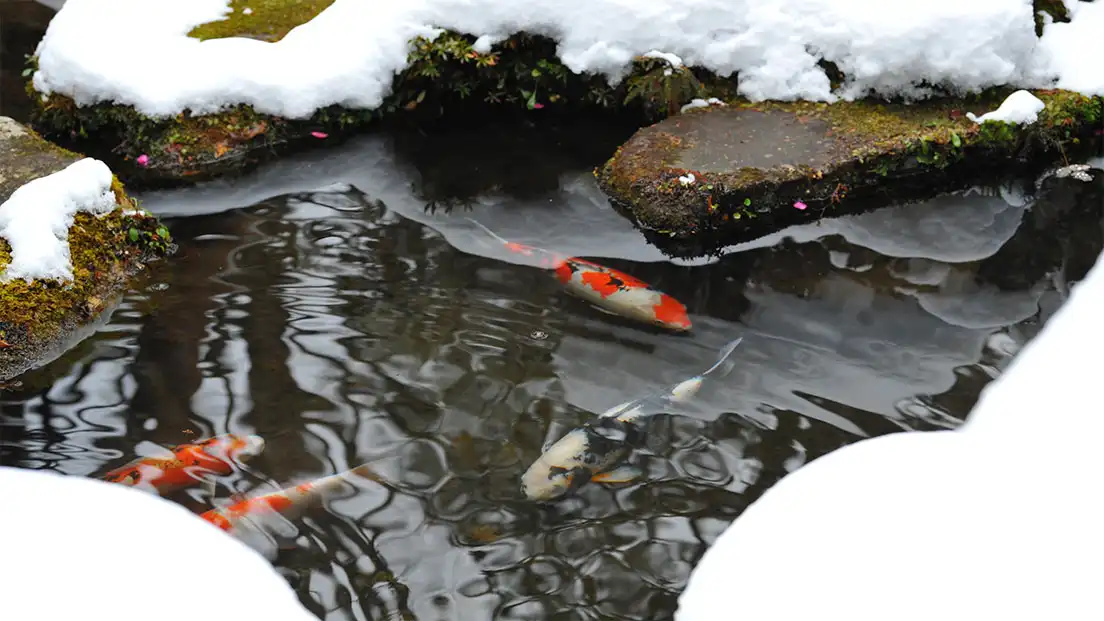
Can Koi Fish Survive in a Pond During Winter? Everything You Need to Know
December 21, 2025, 0 CommentsMany pond owners panic when temperatures drop—especially in regions with harsh winters. The big question everyone asks is: Can koi fish survive in winter?
The answer is yes! Koi are hardy, resilient fish that can live through freezing temperatures as long as their pond is properly prepared.
In this complete guide, we’ll walk you through essential koi winter pond care steps, ideal pond conditions, what to avoid, and how to keep your koi safe until spring.
At Reflections Water Gardens, we help homeowners design healthy, year-round ponds built to support koi through every season—including the toughest winter months.
Do Koi Fish Actually Survive Winter?
Yes—koi can survive winter even in climates where ponds partially freeze.
Koi enter a natural state called torpor, a type of semi-hibernation where:
- Their metabolism slows
- They need less oxygen
- They stop eating
- They move very little
As long as the pond is deep enough and oxygen remains available, koi can safely overwinter without stress.
Minimum Requirements for Koi to Survive Winter
Here are the basic environmental needs koi require to stay healthy during cold weather:
1. Proper Pond Depth
- Minimum depth: 3 feet
- Ideal depth for colder regions: 4–5 feet
Deeper ponds prevent the entire water column from freezing and maintain stable temperatures.
2. Clean Water Before Winter
Dirty ponds reduce oxygen levels, increasing winter survival risks.
3. Open Hole in the Ice
Koi don’t need warm water—but they do need oxygen exchange.
A small opening is essential for:
- Releasing harmful gases
- Allowing oxygen to enter the pond
4. Reduced Feeding
Once water drops below 50°F (10°C), koi digestion slows and feeding must stop.
Signs Your Koi Are Safe During Winter
Healthy koi in winter will:
- Rest near the bottom of the pond
- Move gently and slowly
- Stay grouped together (normal schooling behavior)
- Not come up for food
If koi appear restless, swim rapidly, or gasp at the water surface, this may indicate oxygen depletion.
Essential Koi Winter Pond Care Steps
Use these steps before and during winter to protect your koi.
1. Clean the Pond Before the First Freeze
A clean pond prevents ammonia buildup and improves water quality.
Tasks to Complete
- Skim leaves and debris
- Vacuum pond bottom
- Trim back aquatic plants
- Remove dying or decaying vegetation
- Check filtration system and replace pads as needed
A clean pond = higher winter survival.
2. Install a Pond Aerator
Aeration is the #1 most important step for koi survival in winter.
Why Aeration Matters
- Prevents complete ice coverage
- Keeps oxygen flowing
- Reduces toxic gas buildup
Place the aerator mid-depth—not at the very bottom, where koi are resting.
3. Use a Pond De-Icer (Floating Heater)
A floating de-icer doesn’t heat the pond—it just keeps a small hole open in the ice.
Benefits
- Ensures oxygen exchange
- Works even in extreme cold
- Safe for koi
Never smash or break pond ice with force; vibrations can injure fish.
4. Stop Feeding at the Right Time
Koi should not eat when water temperatures drop below 50°F (10°C).
Why?
Their digestive system shuts down in colder temperatures, and uneaten food rots—creating toxins.
Use a pond thermometer to monitor feeding schedules.
5. Switch to Cold-Weather Koi Food (Optional)
If temperatures fluctuate, feed koi a wheat-germ-based food when water is 50–55°F.
This digestible formula prevents gut blockages as temperatures drop.
6. Check Water Quality Throughout Winter
Even in cold weather, you should test water occasionally.
Look for:
- Ammonia
- Nitrites
- pH fluctuations
- Oxygen levels
Stable water = stress-free koi.
Table: Koi Winter Survival Checklist
| Winter Care Task | Why It Matters | Recommended Tools |
| Clean the pond pre-winter | Removes toxins & debris | Pond net, skimmer, vacuum |
| Add aerator | Keeps oxygen flowing | Air pump, air stones |
| Use pond de-icer | Maintains ice opening | Floating heater |
| Stop feeding below 50°F | Prevent digestive issues | Pond thermometer |
| Trim plants | Reduces decomposition | Pruning shears |
| Test water monthly | Ensures safe conditions | Water test kit |
Common Winter Problems Koi Owners Should Avoid
Even hardy koi can experience issues if ponds are not prepared correctly.
1. The Pond Freezes Completely
A fully frozen pond = no oxygen exchange.
This can cause fish suffocation.
Solution:
Always use an aerator and de-icer.
2. Feeding Too Late Into the Season
Late feeding is one of the biggest dangers for koi.
Food can rot in their stomach, causing fatal health issues.
3. Over-cleaning or Disturbing Resting Koi
During winter, koi are very sensitive.
Avoid:
- Wading into the pond
- Moving rocks
- Vacuuming
- Loud vibrations
Let koi rest undisturbed.
4. Using Salt or Chemical Treatments During Winter
Cold temperatures slow koi metabolism, making them vulnerable to chemical imbalances.
Avoid treatments unless professionally recommended.
How Reflections Water Gardens Helps With Koi Winter Care
At Reflections Water Gardens, we design natural, eco-friendly ponds that support koi health year-round. Our winter setups focus on:
- Proper pond depth
- Natural filtration
- Aeration systems
- Low-maintenance water circulation
- Seasonal pond maintenance plans
If your pond isn’t winter-ready, our experts can help prepare the system and ensure your koi stay safe through freezing temperatures.
Final Thoughts
So—can koi fish survive winter?
Absolutely. With the right depth, clean water, open ice section, and proper aeration, koi thrive even in freezing temperatures.
By following these essential koi winter pond care steps, homeowners can protect their fish and enjoy a peaceful, thriving pond all year long.
If you want a professionally designed koi pond or need winterization help, Reflections Water Gardens specializes in natural, sustainable water features that look beautiful and support aquatic life through every season.
0 Comments