
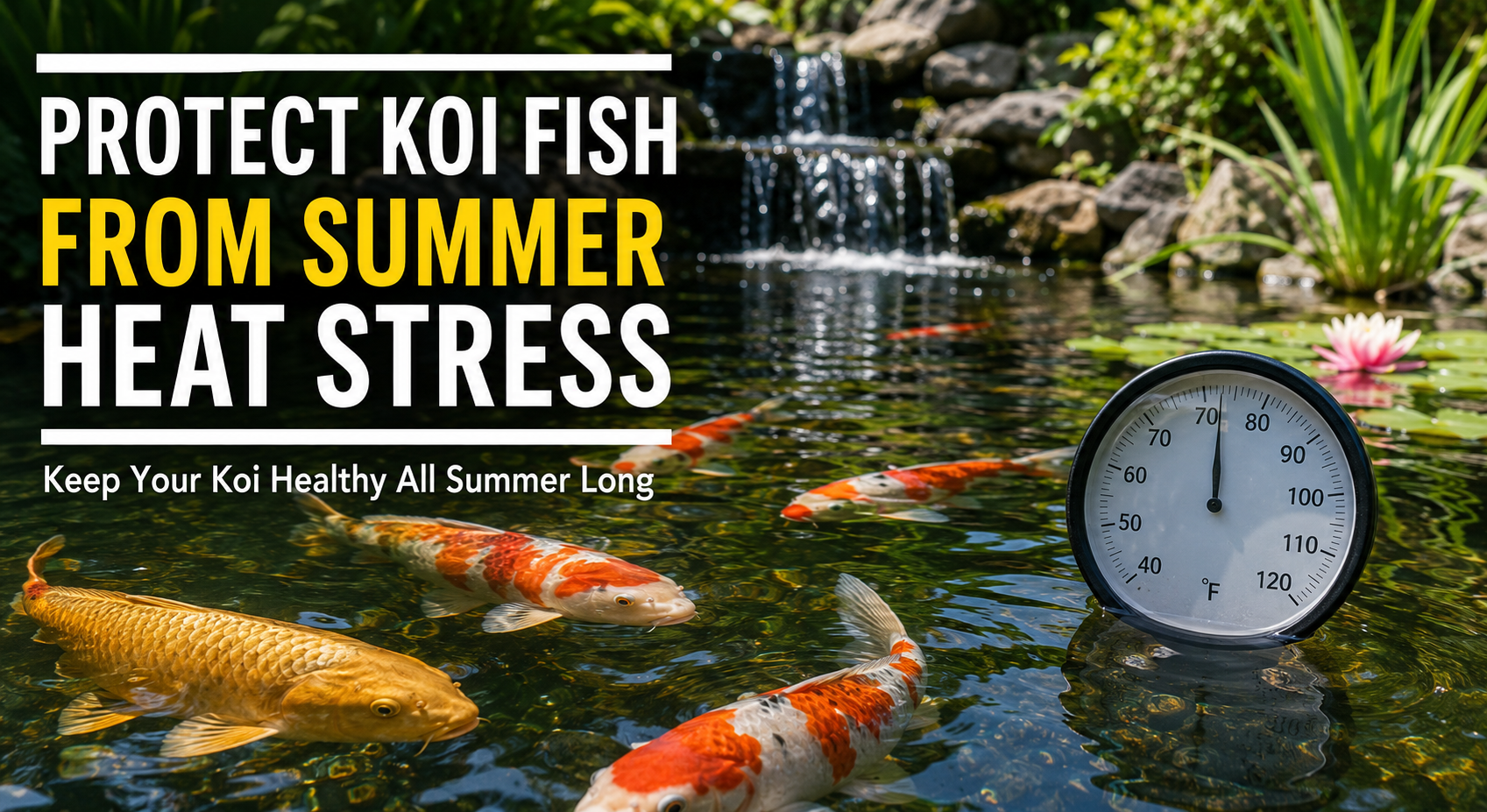
What’s the Best Way to Protect Koi Fish From Summer Heat Stress?
August 3, 2026, 0 CommentsWhat’s the Best Way to Protect Koi Fish From Summer Heat Stress?
Koi are hardy fish, but they have real physiological limits. When pond temperatures climb into the upper 70s and beyond, koi face reduced oxygen availability, suppressed immune systems, and elevated vulnerability to disease. Protecting your fish through peak summer heat requires consistent attention to a handful of key factors.
Understanding How Heat Affects Koi
Koi are cold-blooded animals, meaning their body temperature tracks with the water around them. As water warms, their metabolism accelerates. They need more oxygen while the water holds less of it. Their immune systems become less effective, making them more susceptible to bacterial infections and parasites.
Koi can tolerate temperatures up to around 85°F, but stress begins above 75°F, especially when temperatures change rapidly or oxygen levels drop.
Keep Dissolved Oxygen Levels High
Oxygen is the single most important factor for koi health during summer. Warm water holds significantly less dissolved oxygen than cooler water, and active, warm-water fish demand more of it.
Maximize Surface Agitation
Waterfalls, fountains, and aerators create surface movement that allows oxygen to transfer into the water. During peak heat, run every aeration source you have. Fish gasping at the surface in the early morning is a sign overnight oxygen levels dropped dangerously low.
Add Supplemental Aeration if Needed
A dedicated air pump with air stones placed in the deepest part of your pond can significantly boost dissolved oxygen levels. This is one of the most cost-effective investments for a koi keeper heading into summer.
Manage Water Temperature Directly
While you can’t control the weather, you can influence your pond’s temperature through strategic design and careful water management.
Use Shade Strategically
Direct sunlight heats pond water quickly. Natural shade from trees, pergolas, or shade cloth can meaningfully reduce peak temperatures. Water lilies with large floating leaves also provide shade while improving water quality.
Avoid Dramatic Temperature Swings
Rapid temperature changes stress koi more than stable warmth. If adding cooler water, do it gradually, never in large sudden amounts. Aim for temperature changes of no more than 3°F per hour.
Adjust Feeding Practices for Hot Weather
Overfeeding during summer is a common and costly mistake. Uneaten food decays and spikes ammonia levels, which become more toxic as temperature and pH rise.
Feed smaller amounts using a high-quality, easily digestible wheatgerm-based food when temperatures consistently exceed 80°F. At temperatures above 85°F, stop feeding entirely until temperatures moderate.
Monitor Water Quality Frequently
Summer is the highest-risk season for water quality problems. Test your pond water weekly for ammonia, nitrite, nitrate, and pH. Elevated ammonia or nitrite during heat is an emergency requiring immediate large partial water changes and reduced feeding.
Watch for Signs of Stress and Disease
Koi under heat stress display recognizable signs: listlessness, loss of appetite, hovering near the surface or waterfall, and clamped fins. These behaviors warrant immediate investigation of water quality and temperature.
Because warm water compromises koi immune function, bacterial infections and parasites spread more quickly in summer. Isolate affected fish promptly if disease is suspected.
Professional Pond Support for Summer
If you’re concerned about your koi entering summer or have experienced fish losses in previous years, a professional pond maintenance visit can help you assess your system’s capacity and make improvements before peak heat arrives.
Frequently Asked Questions
What temperature is too hot for koi?
Koi begin experiencing stress above 75°F and face serious health risks above 85°F. Extended exposure to temperatures above 90°F can be lethal, particularly when oxygen levels are also low.
Should I stop feeding koi in extreme heat?
Yes. When water temperatures consistently exceed 85°F, stop feeding koi. Their digestive systems slow significantly in extreme heat, and uneaten food rapidly degrades water quality.
Can I add ice to cool my pond?
Ice provides only minor, temporary relief and won’t meaningfully change a full pond’s temperature. Rapid cooling can also shock fish. Focus instead on shade, aeration, and gradual partial water changes with cooler water.
How do I tell if my koi have parasites versus heat stress?
Heat stress typically affects the whole pond at once, with fish congregating near oxygenated areas. Parasites often cause scratching or flashing behavior on individual fish. A microscopic skin scrape is the definitive way to confirm parasites.
0 Comments