
How to Add a Koi Pond to Your Backyard This Summer
May 18, 2026, 0 CommentsThere’s something magical about watching colorful koi fish glide through a backyard pond on a warm summer evening. If you’ve been dreaming of adding a koi pond to your Indianapolis backyard, summer is the perfect time to start planning and building. The warm weather provides ideal conditions for construction and allows your new ecosystem to establish before winter arrives.
At Reflections Water Gardens, we’ve designed and built hundreds of koi ponds across Indianapolis and central Indiana. This comprehensive guide covers everything you need to know about adding a stunning koi pond to your outdoor space this summer, from initial planning to long-term maintenance.
Why Summer Is the Best Time to Add a Koi Pond
Timing matters when building a koi pond in Indiana. Summer offers several distinct advantages for pond installation. The ground is dry and easier to excavate compared to spring’s muddy conditions or fall’s unpredictable weather. Warm temperatures allow beneficial bacteria to establish quickly in your new pond’s biological filter, creating a healthy environment for fish faster.
Plants establish stronger root systems when planted in summer warmth, and koi fish adapt more easily to new ponds when water temperatures are stable and warm. You’ll also have months to enjoy your new water feature before Indianapolis’s winter weather arrives.
Starting your project in late May or early June gives you the entire summer to complete construction, let the ecosystem mature, and introduce fish gradually before cooler temperatures set in.
Choosing the Right Size and Location for Your Backyard Koi Pond
Size considerations are crucial when planning your koi pond. While smaller ponds are possible, koi thrive best in larger volumes of water. A minimum of 1,000 gallons is recommended for a small koi population, though 1,500 to 3,000 gallons is ideal for most backyard ponds. Mature koi can reach 24-36 inches in length, so they need adequate swimming space.
Depth is equally important for Indianapolis climate conditions. Your pond should be at least 3 feet deep, with portions reaching 4-5 feet deep. This depth protects koi during Indiana’s cold winters and provides stable temperatures during hot summer days.
Location selection impacts your pond’s long-term success. Choose a spot that receives 4-6 hours of morning sunlight daily (beneficial for plants but prevents excessive algae growth). Avoid areas directly under trees (falling leaves create maintenance problems), and select naturally level ground when possible (reduces excavation costs). Make sure the location is visible from your home’s main living areas so you can enjoy watching your koi.
Ready to design your dream koi pond? Call Reflections Water Gardens at (317) 838-5085 for a free consultation and custom design services in Indianapolis.
Popular Koi Pond Design Styles for Indianapolis Backyards
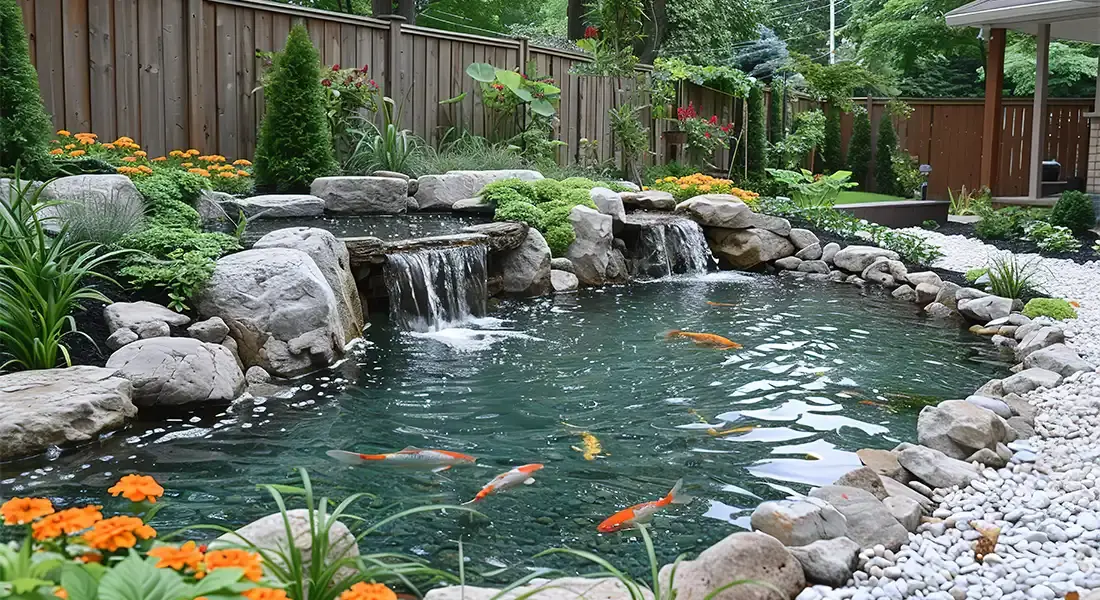
Your pond’s design should complement your home’s architecture and landscape style. Natural ecosystem ponds feature irregular shapes with stone edges, abundant plants, and cascading waterfalls. They blend seamlessly into natural landscapes and create wildlife habitats beyond just koi.
Formal geometric ponds work well with contemporary or traditional architecture. These feature clean lines with rectangular, circular, or L-shaped designs, often incorporating raised stone walls and minimal plantings for a sophisticated look.
Japanese-inspired koi ponds remain timeless favorites. These include curved shapes with ornamental bridges, carefully placed rocks and boulders, traditional Japanese maples and ornamental grasses, and tranquil atmosphere with gentle water movement.
For smaller Indianapolis yards, pondless waterfalls connected to a hidden reservoir can provide the beauty of moving water with lower maintenance, though they won’t accommodate koi. If space is limited, consider a smaller decorative pond for goldfish instead of koi.
Essential Components Every Koi Pond Needs
A successful koi pond requires several critical systems working together. The filtration system is your pond’s most important component. Mechanical filtration removes debris and waste particles. Biological filtration houses beneficial bacteria that convert toxic ammonia from fish waste into less harmful compounds. UV clarifiers help control green water caused by suspended algae.
A properly sized pump circulates your entire pond volume at least once per hour. For a 2,000-gallon pond, you need a pump rated for at least 2,000 gallons per hour. Waterfalls and streams not only add beauty but also aerate the water, which is essential for koi health.
Quality pond liner protects against leaks. EPDM rubber liner (45-mil thickness minimum) or reinforced polyethylene liner for larger installations are your best options. Underlayment beneath the liner prevents punctures from rocks and roots.
Aquatic plants serve multiple purposes in koi ponds. Water lilies provide shade and reduce algae growth. Marginal plants like cattails and iris filter nutrients and provide natural habitat. Submerged oxygenating plants help maintain water quality.
Step-by-Step Koi Pond Installation Process
Professional installation typically follows this timeline for a medium-sized backyard pond. Week one involves design consultation and planning, marking the pond outline, excavation, and creating shelves for plants. Week two covers installing underlayment and liner, setting up pump and filtration systems, adding rocks and stones for edges, and beginning waterfall or stream construction.
Week three focuses on filling the pond with water, treating water to remove chlorine, starting the filtration system, and planting aquatic plants. Week four allows the ecosystem to establish, monitoring water chemistry, and gradually introducing koi fish (starting small and increasing population slowly).
While experienced DIYers can tackle smaller pond projects, most Indianapolis homeowners find professional installation worthwhile for anything larger than a small decorative pond. Proper excavation, filtration design, and waterproofing require expertise that prevents costly mistakes.
Want professional koi pond installation in Indianapolis? Reflections Water Gardens handles every aspect of design, construction, and setup. Call (317) 838-5085 to get started.
Selecting Koi Fish for Your New Backyard Pond
Once your pond ecosystem is established (typically 4-6 weeks after filling), you can begin introducing koi. Start with small, hardy koi (6-8 inches) that adapt more easily to new environments. Popular varieties for Indianapolis ponds include Kohaku (white body with red patterns), Sanke (white body with red and black patterns), Showa (black body with red and white patterns), and Ogon (solid metallic colors like platinum or gold).
Stock your pond conservatively. A common rule is 1 inch of fish per 10 gallons of water for young koi, with plans to accommodate their growth. For a 2,000-gallon pond, start with 3-5 small koi.
Purchase koi from reputable dealers who can provide health guarantees and advice. Local Indianapolis koi retailers understand our climate and can recommend hardy varieties suited for Indiana conditions.
Summer Maintenance for Your New Koi Pond
Maintaining water quality is critical, especially during your pond’s first summer. Test water weekly during the first month for ammonia, nitrite, nitrate, and pH levels. Feed koi daily but avoid overfeeding (uneaten food degrades water quality). Remove debris like leaves and dead plant material regularly.
Monitor your filtration system daily to ensure proper operation. Clean mechanical filters weekly or as needed. Backwash or clean filter media according to manufacturer guidelines. Check pump intake screens for clogs that reduce water flow.
During hot Indianapolis summer days, watch for low oxygen levels (fish gasping at the surface). Add aeration if needed through extra waterfalls or air stones. Partial water changes (10-15% weekly) help maintain stability in new ponds still developing their biological balance.
Preparing Your Indianapolis Koi Pond for Winter
While summer is for enjoying your new pond, start planning for winter by late August. Continue feeding koi high-quality food to build their fat reserves for winter. As water temperatures drop below 50°F in late fall, reduce feeding and switch to wheat-germ-based food that’s easier to digest in cold water.
Stop feeding completely once temperatures consistently stay below 50°F. Your koi will enter a dormant state, living off stored body fat until spring. Make sure your pond is at least 3 feet deep so it won’t freeze solid during Indiana winters.
A pond de-icer or aerator keeps a hole open in the ice, allowing harmful gases to escape. This is essential for koi survival during frozen months. Never break ice by hitting it (the shock waves can harm fish). Instead, use warm water to melt an opening.
Budgeting for Your Backyard Koi Pond Project
Koi pond costs vary widely based on size, complexity, and features. A basic 1,000-gallon pond with simple filtration typically runs $5,000 to $8,000. A mid-range 2,000-3,000 gallon pond with quality filtration, waterfall, and professional installation costs $10,000 to $20,000. Large, elaborate ponds with streams, multiple waterfalls, and extensive landscaping can exceed $30,000.
Beyond initial construction, budget for ongoing costs. Koi fish range from $20 to several hundred dollars depending on size and variety. Quality fish food costs $30 to $50 per month during feeding season. Electricity for pumps runs approximately $30 to $60 per month. Water treatments and testing supplies add $20 to $40 per month for new ponds.
The investment pays off in increased property value, outdoor entertainment value, and the peaceful ambiance of your water garden.
Transform Your Indianapolis Backyard with a Custom Koi Pond
Adding a koi pond to your backyard creates a living work of art that brings nature’s beauty directly to your outdoor living space. This summer is the perfect time to start your project, giving you months to enjoy your investment before winter.
Reflections Water Gardens has been creating stunning koi ponds for Indianapolis area homeowners for years. Our team handles every aspect from initial design consultation through construction and fish introduction. We understand Indiana’s climate challenges and design ponds that thrive year-round.
Our services include custom design tailored to your yard and preferences, professional installation with proper filtration and circulation, high-quality materials backed by warranties, ongoing maintenance packages, and expert advice for fish selection and care.
Ready to create your backyard oasis? Call Reflections Water Gardens at (317) 838-5085 for a free consultation. Let’s design your dream koi pond this summer.
0 Comments